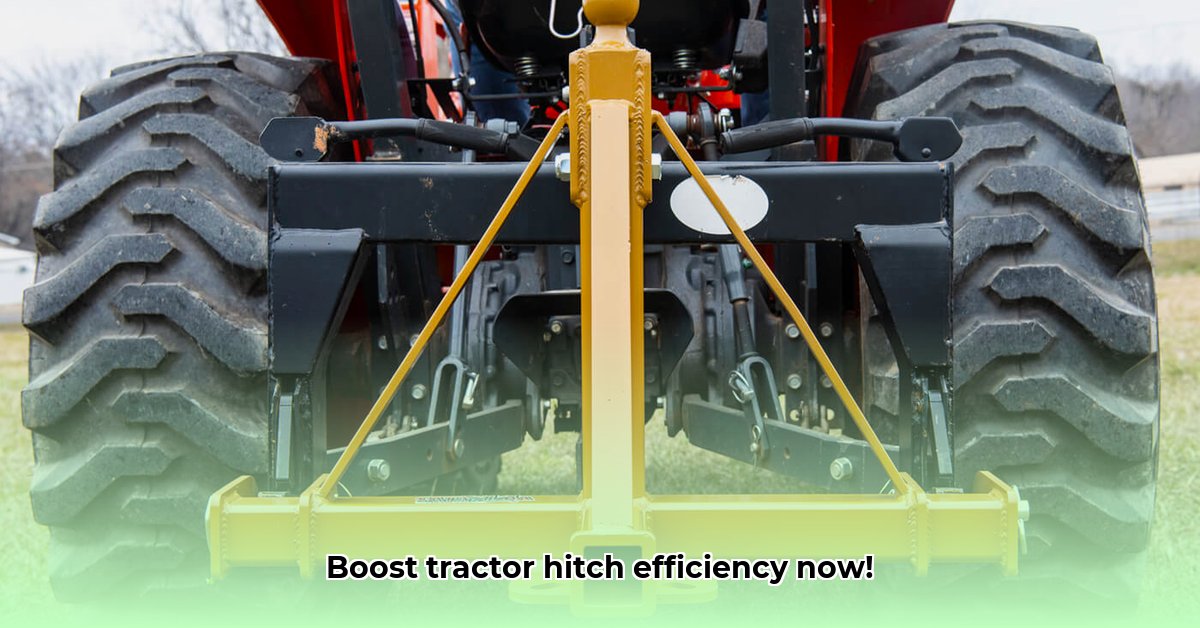
Hitch for Tractor: Maximizing Efficiency and Sustainability
Tractor hitches are essential for efficient and sustainable farming. They connect your tractor to implements, and selecting the right one significantly impacts operational efficiency and environmental impact. A properly chosen hitch improves fuel economy and minimizes soil compaction. For more on tractor power takeoff extenders, see this resource.
Decoding Tractor Hitch Types: A Simple Guide
Several hitch types cater to different tractor sizes and implement needs. Understanding these differences is crucial for optimal performance and sustainability.
- Category 1 Hitches: Suitable for smaller tractors (under 40 HP) and lightweight implements like tillers and small mowers.
- Category 2 Hitches: Designed for medium-sized tractors (40-80 HP) and implements such as larger mowers, cultivators, and lighter plows.
- Category 3 Hitches: Ideal for larger tractors (over 80 HP) and heavy-duty implements including large plows and harrows.
- Quick-Attach Hitches: These aren't a hitch category but a valuable add-on for any category, enabling fast implement changes, saving time and fuel.
Picking the Perfect Hitch: Factors to Consider
Choosing the right hitch depends on several factors. Improper selection leads to inefficiency and potential damage.
- Tractor Size and Power: Consult your tractor's manual for its lifting capacity and three-point hitch specifications. Matching hitch and tractor capabilities prevents overloading.
- Implements Used: The weight and size of your tools determine the appropriate hitch category. A small tiller requires a smaller hitch than a heavy plow.
- Farming Tasks: Heavy-duty tillage demands a robust Category 3 hitch, while lighter tasks are suitable for Category 1 or 2.
- Budget: While quick-attach hitches have a higher initial cost, they offer long-term benefits by saving valuable time and potentially reducing labor costs.
| Tractor Size (Approximate Horsepower) | Suitable Hitch Category | Typical Implements |
|---|---|---|
| Small (Under 40 HP) | Category 1 | Tillers, small mowers, cultivators |
| Medium (40-80 HP) | Category 2 | Larger mowers, cultivators, plows |
| Large (Over 80 HP) | Category 3 | Heavy plows, harrows, large implements |
Always consult your tractor and implement manuals for precise specifications and compatibility.
Hitch Installation and Adjustment: A Step-by-Step Guide
Correct installation is crucial for safety and efficiency. Improper installation can reduce effectiveness and lead to accidents. Always consult your tractor's and implement's manuals.
- Prepare the Hitch: Raise the tractor's three-point hitch arms fully.
- Align the Implement: Carefully align the implement's hitch pins with the tractor hitch holes.
- Secure the Pins: Use cotter pins or clips to secure the pins firmly.
- Lower the Implement: Slowly lower the implement, checking alignment and ground clearance. Adjust as needed.
- Test and Adjust: Test the implement to ensure smooth operation, adjusting as necessary.
Maintaining Your Hitch: Simple Steps for a Long Life
Regular maintenance extends hitch lifespan and prevents costly repairs.
- Lubrication: Regularly lubricate moving parts to reduce friction and wear.
- Regular Inspections: Inspect for wear, damage, or loose connections.
- Tightening: Ensure all bolts and pins are securely tightened.
Troubleshooting Common Hitch Problems
Addressing problems quickly prevents escalating issues.
Problem: Implement won't lift. Possible Causes: Loose pins, worn bushings, hydraulic problems. Solutions: Check pins, inspect bushings, have hydraulics checked by a mechanic.
Problem: Implement misalignment. Possible Causes: Improper installation, bent hitch arms. Solutions: Reinstall, inspect hitch arms.
Sustainability and Your Tractor Hitch: A Greener Choice
Proper hitch selection and maintenance directly contribute to sustainable agriculture. Appropriate hitches minimize soil compaction, reduce fuel consumption, and prolong equipment life. This minimizes the environmental impact of farming operations.
How to Reduce Tractor Fuel Consumption Using Sustainable Technologies
Key Takeaways:
- Selecting the correct hitch minimizes fuel waste.
- Regular hitch maintenance prevents fuel-wasting mechanical issues.
- Proper hitch adjustment reduces wear and tear, extending equipment life and saving fuel.
- Minimizing soil compaction through proper hitch use leads to long-term fuel savings.
Understanding Tractor Hitches: The Foundation of Efficiency
Choosing the right hitch type significantly influences fuel efficiency. Overloading a tractor due to inadequate hitch selection forces the engine to work harder, increasing fuel consumption.
Types of Tractor Hitches: Finding the Perfect Match
Each hitch category serves a purpose; mismatching them to the tractor and implement size results in inefficiency. Remember to always consult your tractor's specifications.
Hitch Selection: A Guide to Optimized Fuel Use
Consider your tractor's capacity, implement weight, three-point hitch geometry, and drawbar capacity when choosing a hitch. Any mismatch leads to reduced fuel efficiency.
Hitch Installation & Adjustment: A Step-by-Step Guide
Careful installation and adjustment are crucial. Improper setup causes uneven stress, leading to higher fuel usage and potential damage.
Hitch Maintenance & Troubleshooting: Preventing Fuel Waste
Regular maintenance prevents breakdowns that lead to fuel waste. Keep components lubricated and inspect for damage regularly.
Sustainable Practices and Hitch Use: The Bigger Picture
Beyond direct fuel savings, proper hitch use promotes sustainable practices. Minimizing soil compaction conserves soil health and reduces the need for fuel-intensive remediation efforts in the future.